Commercial

Long considered a behind-the-scenes service, commercial hot water infrastructure can be a key player in operational efficiency and carbon reduction strategies. For specifiers, this shift is prompting a closer look at the refrigerants powering modern heat pump systems, and increasingly, one option is gaining attention: R290.
Until recently, carbon dioxide heat pumps were widely considered the benchmark for commercial hot water systems, largely due to their low Global Warming Potential (GWP). Their ability to produce water temperatures above 60 degrees Celsius (critical for preventing Legionella bacteria growth) made them an attractive option for hospitals, hotels, and multi-residential developments.
According to Darren Yearsley, Waterware Technical Director, these carbon dioxide systems have inherent performance limitations specifiers have had to design around.
“CO₂ works best when the water is actively flowing through the system,” explains Darren. “Where it struggles is during recovery, when you need to restore a large volume of stored water back to 60 degrees or higher.”
R290 heat pump systems, by contrast, maintain strong efficiency across all operating modes, Darren notes, “They work well during draw-off, during maintenance, and during recovery.”
The result is a simpler system with more predictable performance and lower operating costs.
Meeting sustainability targets
As regulatory frameworks push projects toward lower emissions and improved energy efficiency, refrigerant choice is becoming a critical specification decision.
R290, with a Global Warming Potential (GWP) of just three, sits dramatically below older refrigerants such as R410A, which carried a GWP of around 2,500. Even compared to carbon dioxide (which has a GWP of one) R290 remains among the lowest-impact refrigerants available.
Importantly, it also maintains high thermal performance, capable of producing hot water up to 75 degrees Celsius comfortably above the temperatures required for safe commercial systems.
“Because R290 is a natural refrigerant derived from propane (LPG), it’s widely available and stable in price,” says Darren. “That makes it easier to model long-term operational costs and carbon performance.”
Manufacturing economics also plays a role. R290 systems operate at lower pressures than CO₂ units, which simplifies engineering and reduces production costs, ultimately lowering the cost per kilowatt for commercial installations.
Addressing safety through system design
Given that R290 is a propane-based refrigerant, safety is often the first concern raised by engineers and consultants. Darren emphasises the key feature is a double-wall separation heat exchange system, which ensures the refrigerant never comes into direct contact with potable water.
“With R290 systems, heat is transferred to mechanical water first, and then from that loop into the drinking water,” he explains. “You would need two separate failures before refrigerant could ever reach the potable supply.”
Darren adds, “a 50-kilowatt commercial heat pump only contains about 3.6 kilograms of refrigerant. That’s less gas than you’d typically have in a standard barbecue bottle on your deck.”
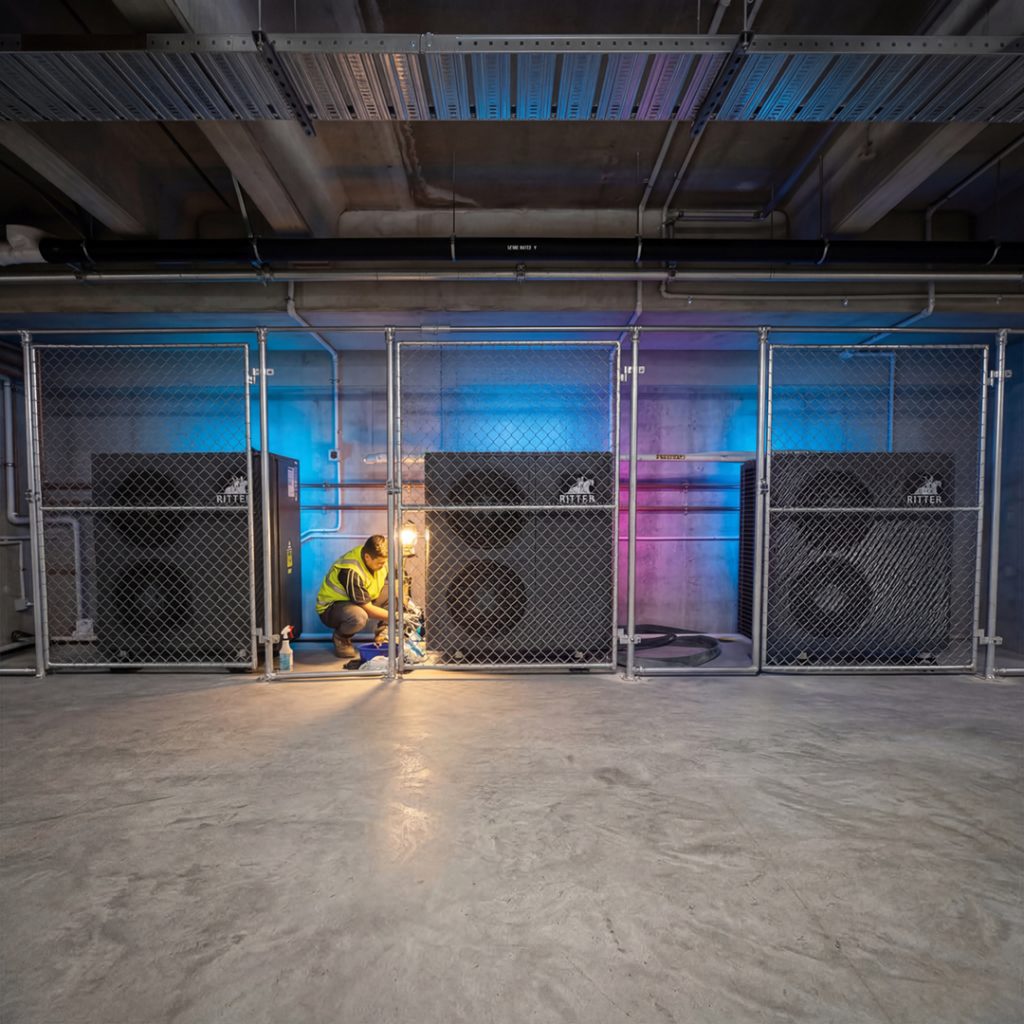
To further reduce risk, most R290 systems are installed as monoblock appliances located outside the building envelope in a freely ventilated space.
While R290 heat pumps offer clear performance advantages, specifying them successfully requires a shift in how engineers approach commercial hot water design.
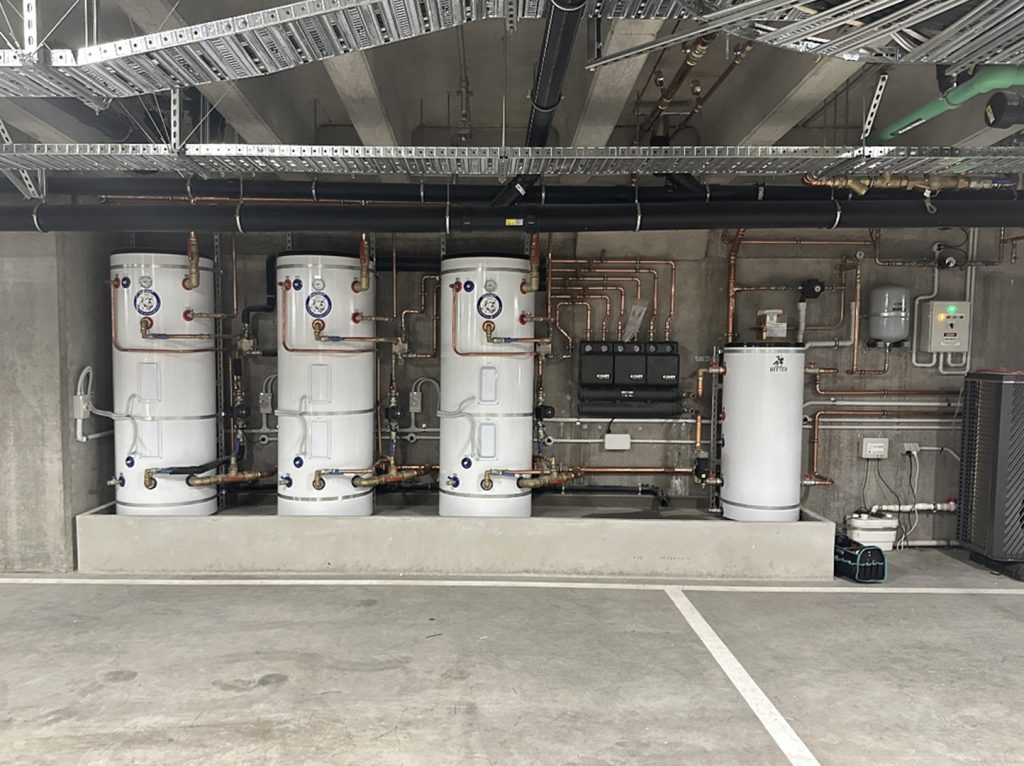
Instead of relying on high instantaneous output, R290 systems favour a storage-and-recovery model. Producing hot water steadily over time and storing it in larger cylinders.
This approach allows systems to recover gradually between demand peaks, such as the period between morning and evening usage in hotels or apartment buildings. By spreading heating over a longer period (two or three hours rather than 20 minutes) the system reduces peak power requirements while still delivering the same total hot water capacity.
“That reduces the capital cost of the plant,” says Darren. “You can install fewer heat pumps and rely more on storage, which ultimately makes the overall power demand more manageable.”
Instead of relying on high instantaneous output, R290 systems favour a storage-and-recovery model. Producing hot water steadily over time and storing it in larger cylinders.
The road to mainstream adoption
While R290 technology is already well established in parts of Europe, adoption in Australasia is still building momentum but the technology is on track to become the industry standard within the next decade.
“Engineers are understandably cautious,” says Darren. “…something specified today might not actually be installed for another two years, so it will take time to be widely adopted.”
“We’ve been doing this for six years now, and experience has allowed us to log performance data and prove the operational savings and carbon reductions in real projects.”
As sustainability targets intensify and electrification becomes central to building services design, R290’s combination of efficiency, cost stability, and low environmental impact positions it as a compelling solution for the next generation of commercial hot water systems.
To learn more contact Waterware today on 09 273 9191 or info@waterware.co.nz
Written by Casey Arden, Archi Pro