Commercial
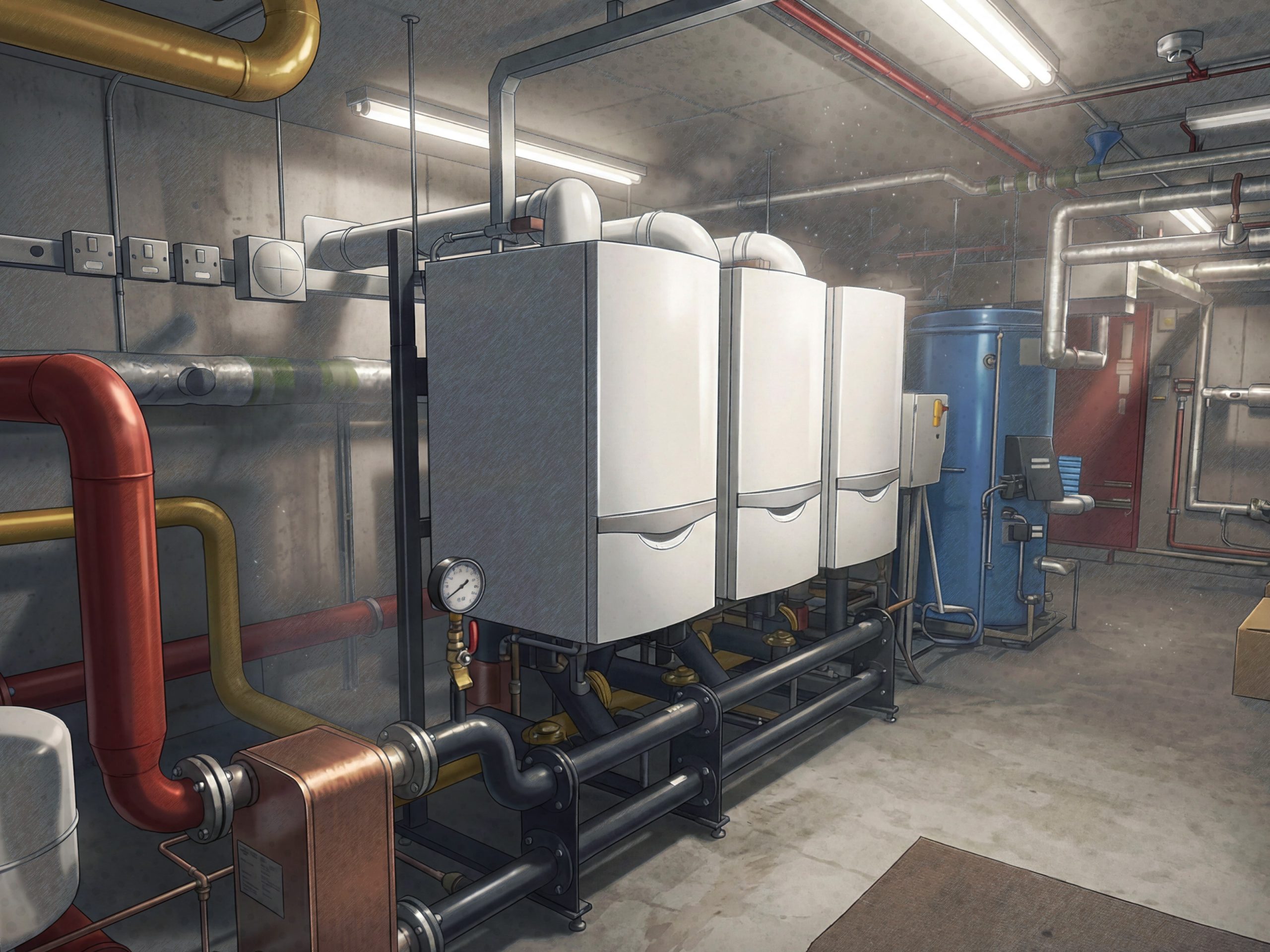
For decades, gas-fired plantrooms have been the backbone of commercial hot water and heating systems across New Zealand. They are familiar, reliable, and well understood by engineers and operators.
Today, that model is under pressure.
Rising energy costs, decarbonisation targets, and long-term uncertainty around gas availability are forcing building owners and consultants to rethink how plantrooms are designed and upgraded. The challenge is no longer whether to move away from gas, but how to do it without introducing risk.
For most existing buildings, the answer is not a simple switch. It is a managed transition.
Why Replacing Gas Is More Complex Than It Sounds

In theory, replacing gas with electric heat pumps is straightforward. In practice, most commercial plantrooms were never designed for that shift.
Common constraints include:
- Limited electrical capacity or costly network upgrades
- Tight plantroom footprints
- Buildings that must remain operational throughout construction
- High peak demand for hot water and heating
- Zero tolerance for downtime in live environments
These constraints are particularly common in aged care, healthcare, and multi-unit residential buildings, where hot water availability is critical to daily operations.
This is why a one-size-fits-all electrification approach often falls short.
The Role of Hybrid Systems in Real-World Transitions
Hybrid plantroom design provides a practical pathway from gas to electrification. Instead of removing gas entirely on day one, hybrid systems allow heat pumps to carry the base load while retaining gas boilers as backup or peak support.
In a hybrid configuration:
- Heat pumps deliver the majority of annual energy demand efficiently
- Gas operates only when required during peak load or extreme conditions
- Electrical upgrades can be staged or reduced
- Reliability and resilience are maintained
This approach aligns closely with how many New Zealand facilities need to operate. It enables meaningful carbon reduction immediately, without compromising service continuity.
Why R290 Heat Pumps Are Central to the Transition
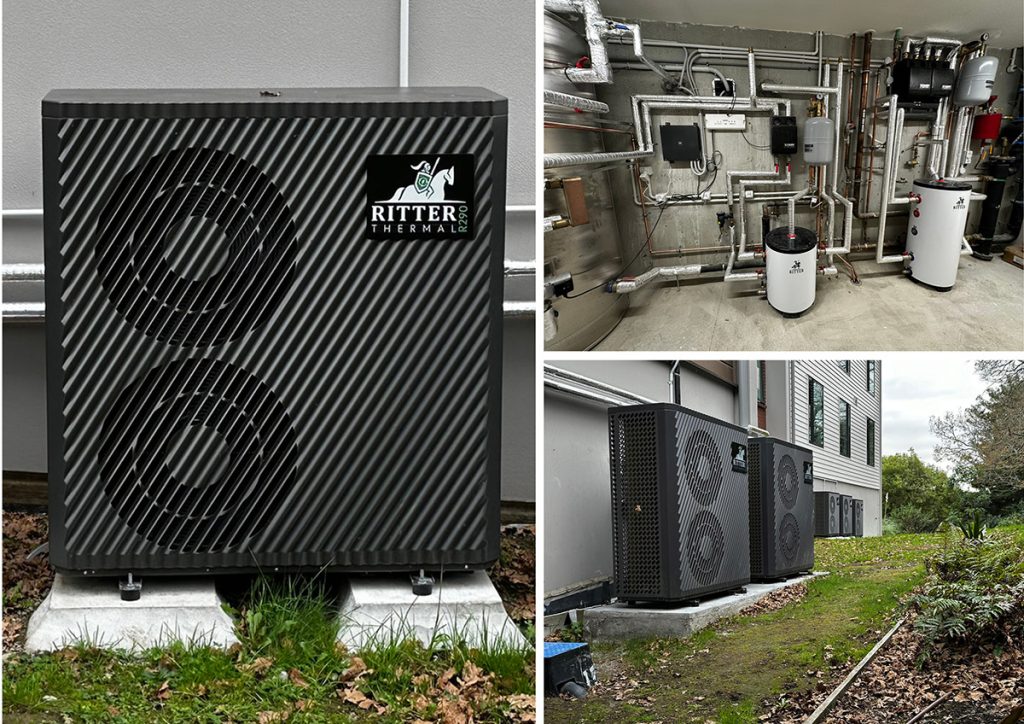
Not all heat pumps are equal when it comes to replacing gas. High-temperature domestic hot water is one of the most demanding loads in a commercial building.
R290 heat pumps have emerged as a strong fit for this role because they can:
- Deliver hot water temperatures up to 75 °C without electric boosting
- Multi-pass operation integrate easily into most existing systems
- Maintain performance across a wide range of ambient conditions
- Operate efficiently in both standalone and hybrid systems
- Support future compliance with low-GWP refrigerant requirements
When designed correctly, R290 systems can cover a large proportion of a building’s hot water demand, significantly reducing reliance on fossil fuels.
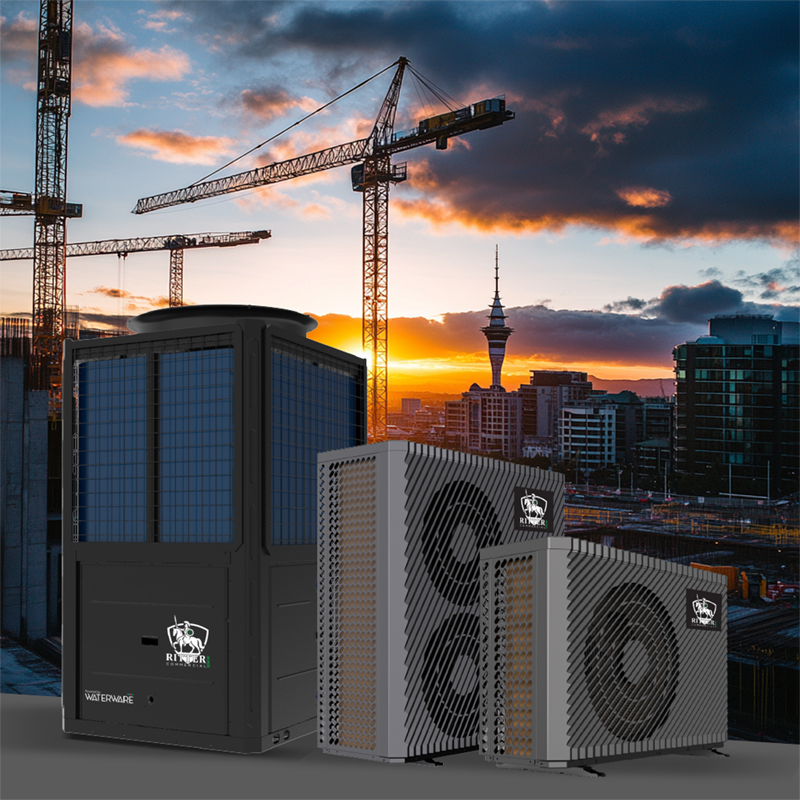
This is where Ritter R290 heat pumps have proven effective in New Zealand conditions, particularly in commercial applications that require high output and consistent performance.
Managing Changeover in Live Buildings
One of the biggest risks in any plantroom upgrade is the changeover itself. Hot water and heating systems cannot simply be switched off while new equipment is installed.
Successful transitions require careful staging.
This often includes:
- Temporary hot water systems during construction
- Parallel operation of old and new plant
- Pre-commissioning and testing before final cutover
- Changeovers planned in hours, not days
For facility managers, this approach reduces disruption and maintains confidence that essential services will remain available throughout the project.
Case Study: Karaka Aged Care Facility
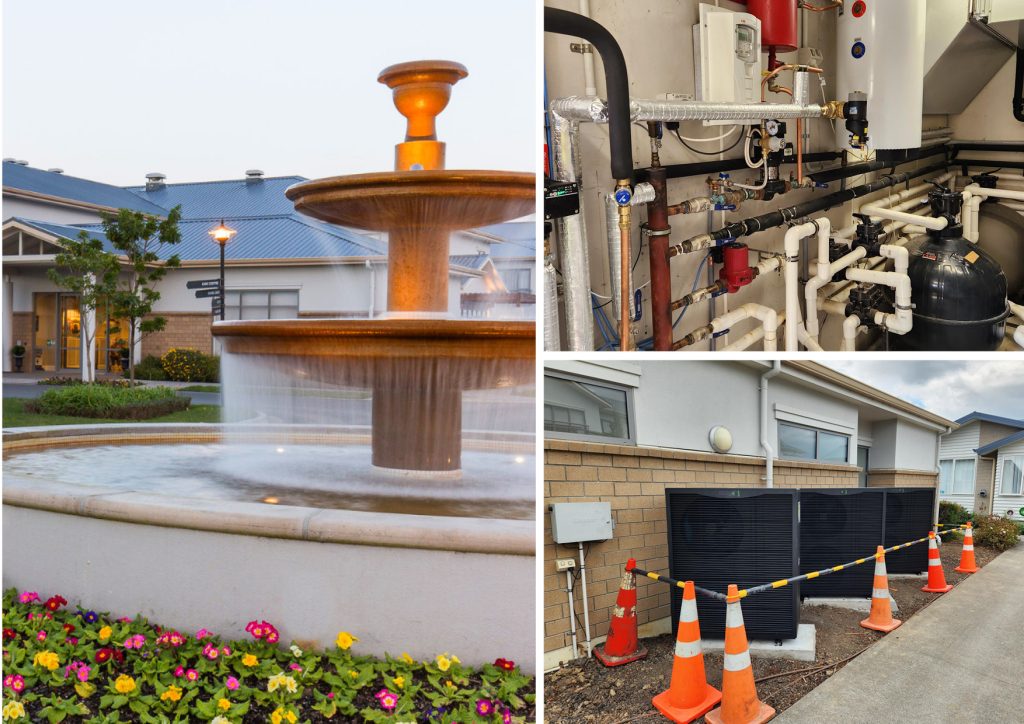
A clear example of this approach is the upgrade at Karaka Aged Care Facility.
The site was operating with an ageing gas-fired system supplying pool, spa and space heating. The organisation had a strong mandate to reduce carbon emissions, but the facility needed to remain fully operational during the upgrade.
Waterware designed a solution using multiple R290 heat pumps in cascade. The system was engineered so that heat pumps carried the all of the load with cascade functionality to modulate from low to high output on demand.
The outcome delivered:
- A 66 percent reduction in heating costs
- A 90 percent reduction in carbon emissions
- Quiet, reliable operation suitable for a residential care environment
- A controlled changeover with no disruption to residents
This project demonstrates how careful design can balance sustainability goals with operational realities.
Click here to see the complete case study
Designing for the Long Term, Not Just the Initial Upgrade
A key advantage of hybrid systems is flexibility. As electrical infrastructure improves or energy strategies evolve, reliance on gas can be further reduced over time.
In many cases, hybrid plantrooms are designed so that:
- Gas boilers are progressively downsized or removed
- Additional heat pump capacity can be added later
- Electrical upgrades are staged rather than immediate
- The system remains future-ready
This staged approach reduces capital shock and allows organisations to move at a pace that aligns with budgets and operational needs.
Why System Design Matters More Than Individual Products

Successful transitions from gas to low-carbon systems are rarely about individual components. They depend on how the system behaves as a whole.
Key design considerations include:
- Correct separation of hot water and space heating loads
- Accurate load modelling across seasons
- Control logic that prioritises efficiency without sacrificing reliability
- Integration between heat pumps, storage, and backup plant
- Hygiene and temperature management to meet compliance requirements
Without system-level design, even high-quality equipment can underperform.
A Practical Path from Gas to Green
For many New Zealand commercial buildings, hybrid R290 systems represent the most practical and lowest-risk pathway away from gas.
They allow organisations to:
- Act now rather than wait for perfect conditions
- Reduce emissions immediately
- Maintain confidence in service delivery
- Protect against future regulatory and energy price risk
Importantly, they align with how buildings are actually operated, not just how they are modelled.
The Takeaway
The transition from gas to low-carbon plantrooms is not a single decision. It is a process.
Hybrid systems, built around high-temperature R290 heat pumps, provide a realistic way forward for New Zealand’s commercial buildings. They balance sustainability, reliability, and operational certainty in a way that fully electric or gas-only systems often cannot.
When designed as part of an integrated system, the move from gas to green becomes achievable, measurable, and repeatable.
If you are planning a plantroom upgrade or exploring options to reduce reliance on gas, Waterware can model a hybrid or fully electric system using its PureFlow design platform.
A complete, performance-verified proposal can be delivered within 48 hours.
🔹 Book a commercial design consultation or call 09 273 9191
🔹 Explore R290 commercial hot water solutions