The Install
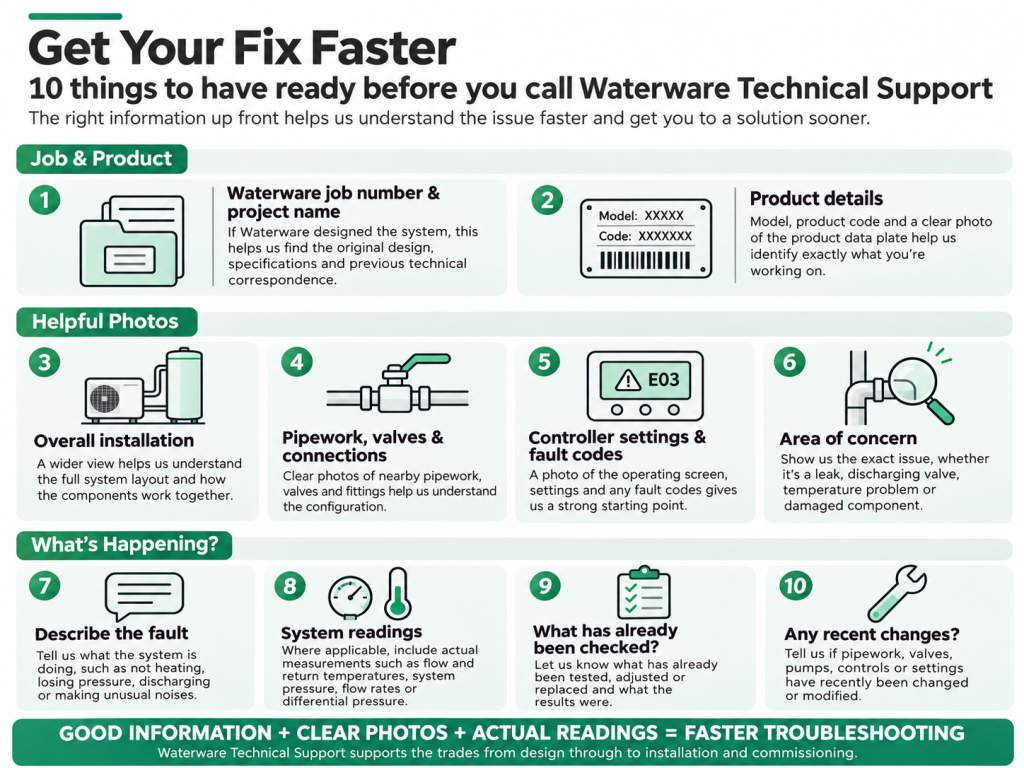
10 things that help Waterware Technical Support get you to a solution faster
Whether you’re installing, commissioning or fault-finding, having the right information ready can make a big difference.
The more context our Technical Support team has from the start, the quicker we can understand the system, narrow down what’s happening and help move things towards a solution.
If you’re getting in touch, these are the 10 things that help us most.
1. Waterware job number and project name
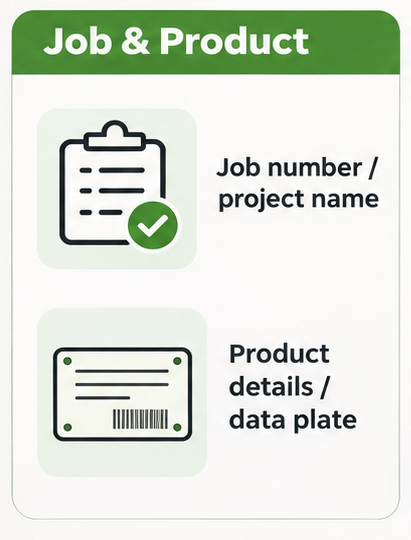
If the system was designed by Waterware, have the job number and project name handy.
That allows our team to quickly find the original design, specifications and any previous technical correspondence.
2. Product details
Let us know what you’re working on.
The product model and product code are useful, and a clear photo of the product data plate is even better.
3. Overall system installation
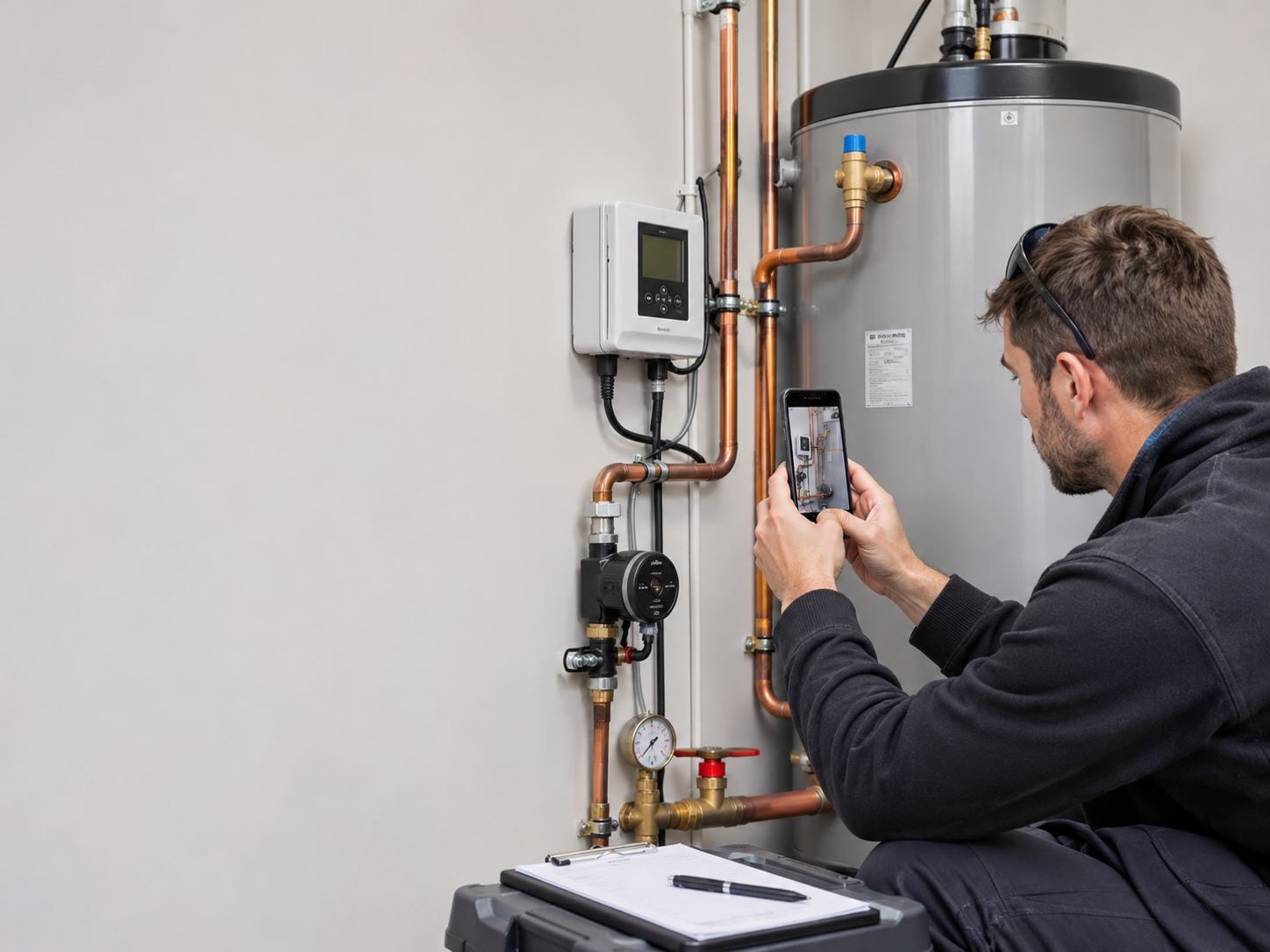
A wider photo showing the complete installation gives us valuable context around the system layout, pipework configuration and how the components work together.
4. Pipework, valves and connections
Photos of the surrounding pipework, valves, fittings and connections help us understand how the system has been configured.
Where possible, include flow and return, inlet and outlet connections and any bypass arrangements.
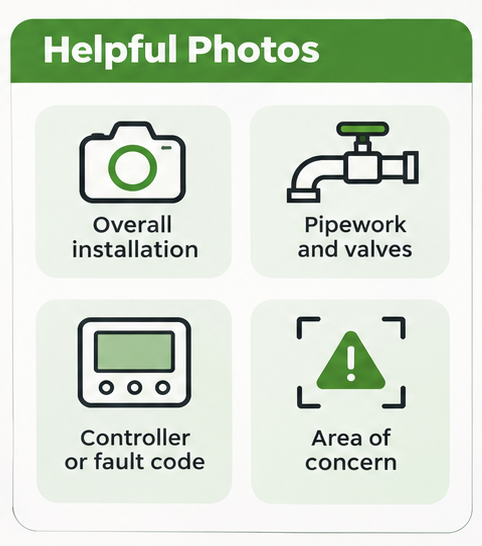
5. Controller settings and fault codes
If there’s a controller or display, a photo of the current operating screen, settings and any fault codes gives us a useful starting point.
6. The area causing concern
A closer photo helps us see exactly where the issue is occurring, whether that’s a leaking connection, discharging valve, incorrect temperature reading or damaged component.
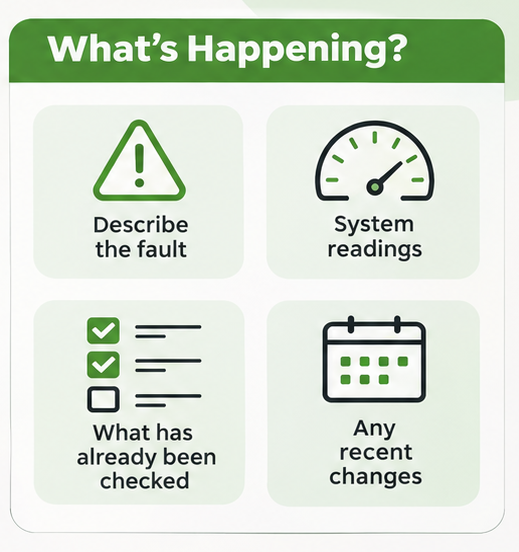
7. What is the system doing?
A clear description of the fault helps narrow things down quickly.
For example:
- Not heating
- Losing pressure
- Discharging
- Making unusual noises
- Not operating as expected
8. System readings and operating conditions
Where applicable, actual readings can be especially useful.
These might include:
- Flow and return temperatures
- System pressure
- Flow rates
- Differential pressure
- Controller settings
- Fault codes
9. What has already been checked?
Let us know what you’ve already tested, adjusted or replaced, and what happened as a result.
This helps avoid repeating checks and gives the technical team a clearer picture of what has already been ruled out.
10. Has anything changed recently?
If pipework, valves, pumps, controls or system settings have recently been changed or modified, let us know.
Sometimes that context can be just as useful as the fault itself.
Better information. Faster troubleshooting.
GOOD INFORMATION + CLEAR PHOTOS + ACTUAL READINGS = FASTER TROUBLESHOOTING.
We know your time on site is valuable.